
Plug and Play: Your Map to the Best EV Charging Networks
Navigating the National EV Charging Network Map
Finding a place to plug in has never been easier than it is in 2026. The national ev charging network map is no longer a sparse collection of dots; it is a robust, interconnected web. With 85,238 stations and 276,191 ports currently active across the country, the infrastructure has reached a tipping point of convenience.
To get the most out of these maps, we recommend starting with the official sources. The Department of Energy’s Alternative Fuels Data Center (AFDC) locator is the gold standard for verified data. This tool is meticulously maintained by the National Renewable Energy Laboratory (NREL) and updated monthly to ensure you aren’t driving toward a ghost station.
Furthermore, the NEVI (National Electric Vehicle Infrastructure) Formula Program has been a game-changer. This federal initiative has funded a massive wave of DC fast chargers along designated “Alternative Fuel Corridors,” ensuring that chargers are spaced no more than 50 miles apart along major highways. When you look at an ev charging network map today, you’ll see these high-speed hubs forming the backbone of interstate travel.
For those who need a streamlined, web-based experience, the EV Charging Station Map & Live Filters offers a fantastic way to see what’s nearby without downloading a dozen different proprietary apps. These tools allow us to see real-time availability and station status—essential for knowing if a stall is “in-use” or temporarily “out of order” before we arrive.
Understanding the ev charging network map Filters
If you open an ev charging network map and see thousands of pins, don’t panic. The secret to a stress-free experience is mastering the filters. Not every plug will fit your car, and not every charger will provide the speed you need.
Here is how we break down the most common filters:
- Connector Types:
- J1772: The standard for Level 2 AC charging. Almost every non-Tesla EV uses this for slow, overnight, or workplace charging.
- CCS (Combined Charging System): The high-speed standard for most European and American EVs (like Ford, GM, and VW) until recently.
- NACS (North American Charging Standard): Originally the Tesla-exclusive plug, now adopted by nearly every major automaker. It’s sleek, reliable, and increasingly the dominant port on the map.
- Power Levels:
- Level 1: Basically a standard wall outlet. You won’t find many of these on public maps because they are too slow for public use.
- Level 2: The “marathon runners” of charging. Great for 3-5 hour stops while shopping or at a hotel.
- DC Fast (Level 3): The “sprinters.” These are what you need for road trips, providing a massive burst of energy in under 30 minutes.
| Charging Level | Typical Power Output | Miles Added per Hour | Best Use Case |
|---|---|---|---|
| Level 2 | 6 kW – 19 kW | 20 – 30 miles | Workplace, Hotels, Shopping |
| DC Fast (Standard) | 50 kW – 150 kW | 150 – 200 miles | Quick lunch stops, Regional travel |
| Ultra-Fast DC | 250 kW – 350 kW | 200+ miles in 15 mins | Long-distance highway trips |
Top Tools and Apps for Real-Time Station Discovery
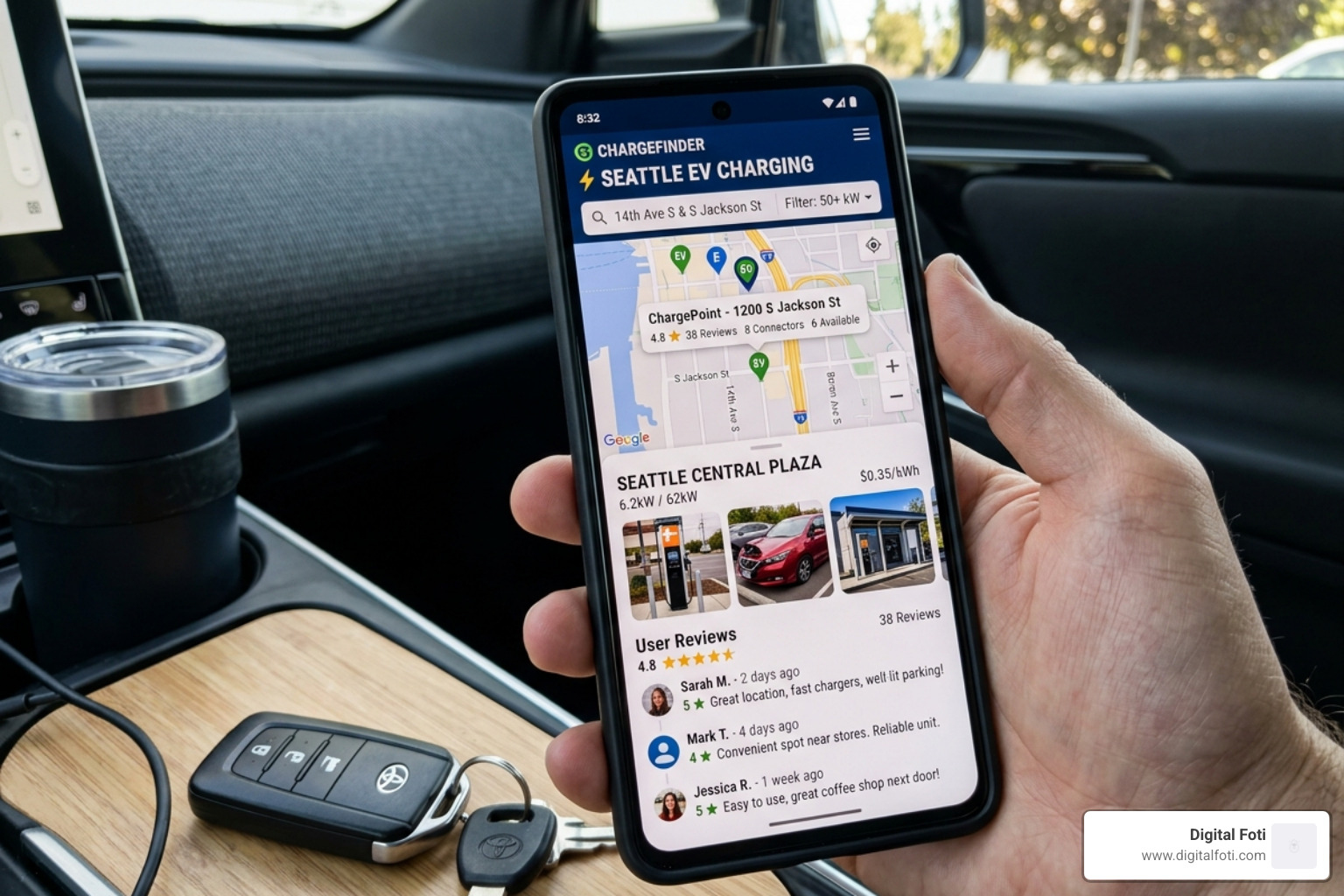
While the official government maps are great for data, the “community” apps are where we find the “boots on the ground” intel. If we want to know if a charger is tucked behind a dumpster or if the coffee shop next door has the best lattes, we turn to crowdsourced platforms.
PlugShare remains the undisputed heavyweight in this category. It’s often described as the “GasBuddy for EV drivers.” Its greatest strength is the check-in feature. When a driver successfully charges, they leave a “thumbs up.” If a station is broken, they leave a warning. This real-time feedback loop is vital for avoiding “charger anxiety.”
For a comprehensive directory that aggregates multiple networks into one view, Charge Map USA | EV Charging Station Directory is an excellent resource. It covers over 77,000 stations across 52 states (including territories), pulling from open-source databases to give us a bird’s-eye view of the entire ecosystem.
When we use these apps, we look for three key things:
- Pricing Transparency: Does the station charge by the kilowatt-hour (kWh) or by the minute?
- Amenity Filters: Can we find a station with a bathroom, Wi-Fi, or a well-lit parking lot?
- Station Reliability Ratings: Many apps now give stations a “Score” based on recent successful charges. If a station has a score of 4/10, we keep driving.
Major Networks and Connector Compatibility
The “Network Wars” of the early 2020s have largely settled into a more cooperative era. As of 2026, the big players have expanded their footprints significantly, and “network roaming”—the ability to use one app to pay for another network’s charger—is becoming more common.
- Tesla Superchargers: With over 2,500 locations and speeds up to 250 kW, this remains the most reliable network. The big news for 2026 is that the Supercharger network is now wide open to non-Tesla vehicles via the NACS standard and “Magic Dock” adapters.
- ChargePoint: They operate the largest number of locations (over 30,000). While many are Level 2, they have a massive presence in urban areas and workplaces.
- Electrify America & EVgo: These are the titans of the highway. They specialize in high-output DC fast chargers (up to 350 kW). You’ll typically find these at major retail hubs like Walmart or Target, conveniently located right off the interstate.

Planning Trips with an ev charging network map
Long-distance travel in an EV is no longer a math problem; it’s a software solution. Modern ev charging network maps often include route optimizers that do the heavy lifting for us.
When we plan a trip, we have to consider more than just distance. Elevation changes (climbing a mountain eats more battery), weather variables (cold air reduces range), and even wind speed play a role. The best mapping tools integrate this data to tell us exactly how long to stay at each stop.
For example, if we are driving a route with 350 kW chargers, the map might suggest two 15-minute stops rather than one hour-long stop at a slower charger. This “splash and dash” strategy is the most efficient way to cover 500+ miles in a day.
Infrastructure Growth and State Leaders in 2026
The growth of the ev charging network map hasn’t been uniform, but the leaders are setting a high bar for the rest of the country.
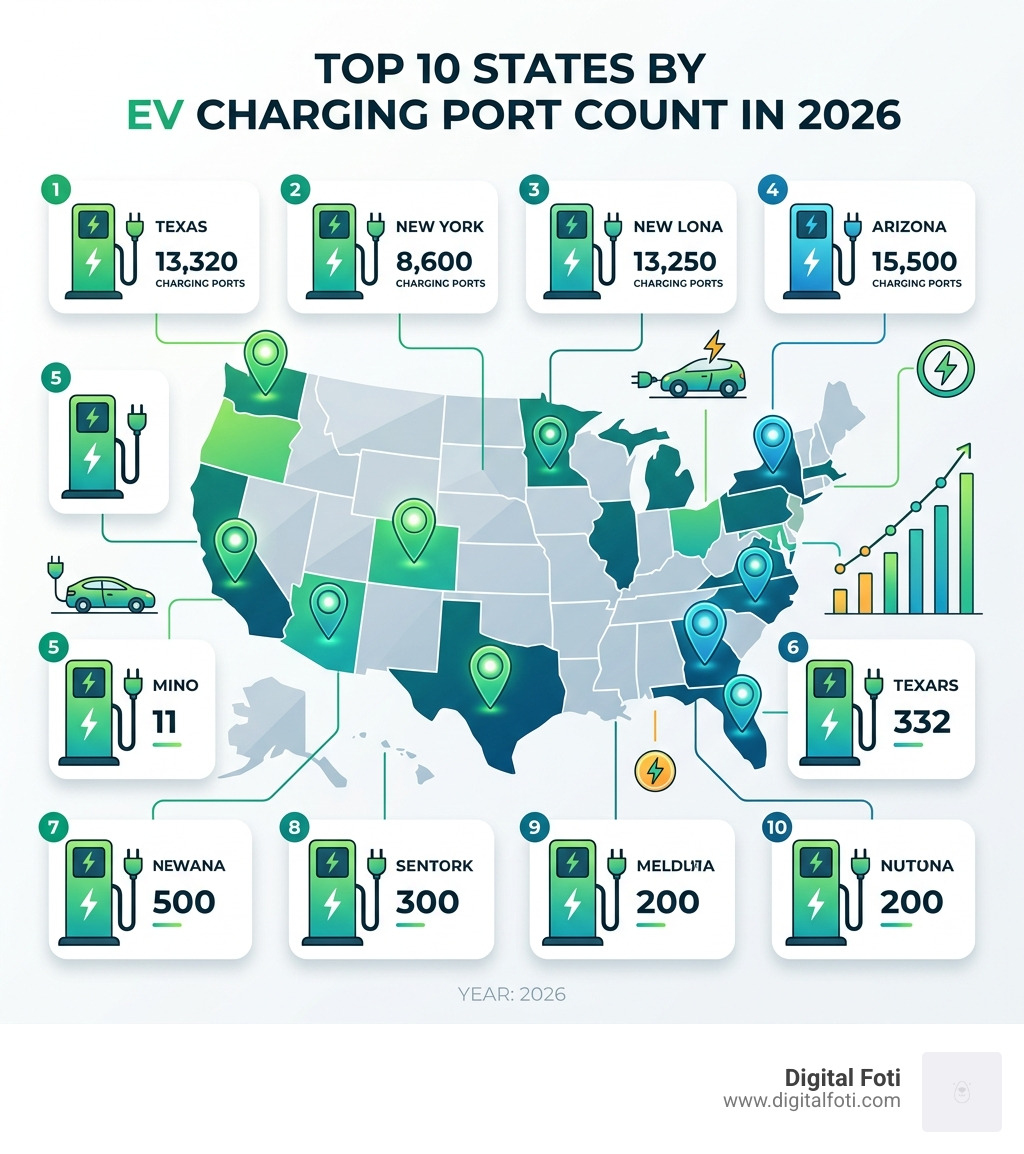
California continues to dominate the charts with 20,568 stations. To put that in perspective, Los Angeles alone has 2,047 chargers, which is more than some entire states had just a few years ago. If you live in a city like San Diego, Irvine, or San Francisco, you are likely never more than a few blocks from a plug.
However, the “EV Desert” is shrinking. New York holds the #2 spot with 5,488 stations, followed closely by Florida with 4,613. We are seeing massive regional expansion in the Southeast and Midwest, fueled by both private investment and federal NEVI funding.
Urban charging density is also evolving. It’s not just about highways anymore; it’s about “curbside” charging for apartment dwellers and high-density hubs in downtown parking garages. This ensures that even those without a garage at home can make the switch to electric.
Frequently Asked Questions about EV Maps
Are Tesla Superchargers open to non-Tesla vehicles?
Yes! As of 2026, most major manufacturers (including Ford, GM, Rivian, Volvo, and BMW) have fully transitioned to the NACS connector or provide official adapters. Tesla has also equipped many stations with the “Magic Dock,” an integrated adapter that allows CCS-equipped cars to plug in and charge using the Tesla app.
How do I check if a charger is currently available?
The best way is to use the specific network’s app (like ChargePoint or EVgo) or a community app like PlugShare. These maps show “Live Data” with color-coded indicators:
- Green: Available
- Blue/Occupied: In-use
- Grey/Red: Out of service or status unknown. Always check the “last seen” timestamp to ensure the data is fresh!
What is the difference between Level 2 and DC Fast charging on a map?
Think of Level 2 as a “slow drip” and DC Fast as a “firehose.”
- Level 2 (6-20 kW): Best for when your car will be parked for several hours. You’ll see these at hotels, malls, and movie theaters.
- DC Fast (50-350 kW): Essential for road trips. These bypass the car’s onboard charger to dump power directly into the battery. On a map, these are usually highlighted with a lightning bolt or a different color pin to signify high speed.
Conclusion
Navigating electric vehicles is a journey, and having the right ev charging network map is like having a high-tech compass. The infrastructure in 2026 is more reliable, faster, and more accessible than ever before. By mastering the filters, choosing the right apps, and understanding the networks, we can drive with total “range confidence.”
At Digital Foti, we are dedicated to providing tech tips for a smarter digital life. From specialized EV advice for everyday users to deep dives into the latest gadgets and vehicle maintenance, we want to help you stay ahead of the curve. Whether you are a first-time EV buyer or a seasoned pro, we are here to simplify the complex and help you enjoy the ride.
For more expert guides and the latest in EV tech, explore More info about EV services. Safe travels and happy charging!
